
Before air conditioning transformed modern comfort, shade and natural cooling defined how communities gathered outdoors. From Roman courtyards to early American town squares, protection from the sun was built into design.
Today, when playground designers often focus on equipment, surfacing, and landscaping, it’s equally important to look upward and plan for protection from harmful UV rays and high temperatures.
Strategically placed playground shade structures not only make play areas safer but also increase comfort, usability, and community value.
“Limiting exposure to the Sun through shade is one of the most efficient and cost-effective ways to reduce heat-related health risks outdoors,” wrote the authors of Shade is Essential Solution for Hotter Cities.
Whether through canopies, pavilions, or covered seating, thoughtfully designed shade encourages people to stay longer, visit more often, and engage comfortably across all ages. In fact, nearly 40 percent of adults in the United States actively seek shade when spending time outdoors.
For park planners, the goal is clear: avoid creating “shade deserts” by understanding the full range of playground shade structure benefits that enhance safety, comfort, and community well-being.
Shade Is a Health and Safety Feature
Exposure to heat and ultraviolet (UV) radiation is one of the biggest barriers to outdoor play, especially for young children, older adults, and caregivers. Playgrounds without adequate shade often go unused during the hottest hours of the day, particularly in warm or sunny climates.
Well-designed playground shade structures help mitigate these risks by:
- Reducing surface temperatures on play equipment.
- Lowering the risk of sunburn, sunstroke, and heat stress.
- Encouraging longer and more frequent play sessions.
- Supporting safer supervision by caregivers and park staff.
Research consistently shows that shaded playgrounds promote increased physical activity and longer dwell times. From a public health standpoint, this is one of the most valuable playground shade structure benefits, helping parks stay active, inclusive, and safe even during peak summer months.
Extending Playtime and Increasing Park Usage
One of the most practical playground shade structure benefits is improved year-round usability. Parks with shaded play zones, seating, and gathering areas stay active throughout the day, not just early in the morning or late in the evening.
When shade is thoughtfully integrated into playground and park design:
- Families stay longer and visit more frequently.
- School groups and camps can safely use the space during mid-day hours.
- Community events become more comfortable for attendees.
- Parks feel inviting and inclusive rather than exposed and overheated.
Shade also protects the community’s investment. By reducing heat-related wear on surfacing and equipment, shade structures help extend the lifespan of playground materials and maximize long-term value.
Comfortable Spaces for Caregivers and Spectators
While playgrounds are designed for children, their long-term success depends on the comfort of adults. Parents, grandparents, teachers, and caregivers all need comfortable places to sit, rest, and observe. When these needs are met, everyone benefits.
Shelters, shade canopies, and playground shade structures that cover seating areas:
- Make supervision more comfortable and accessible.
- Encourage multi-generational use of park spaces.
- Support longer visits and more frequent use.
- Improve accessibility for individuals who are sensitive to heat.
In community planning, shaded seating is often the feature that transforms a playground from a short stop into a true community destination.
Supporting Inclusive and Accessible Park Design
Inclusive playgrounds aim to create environments where people of all abilities can participate fully, and shade is a critical part of that design. Many individuals with medical conditions, sensory sensitivities, or mobility challenges are more vulnerable to heat and sun exposure.
By incorporating shaded routes, rest areas, and play zones, park planners can ensure that outdoor spaces remain comfortable, equitable, and accessible to everyone. From an ADA and universal design perspective, playground shade structures contribute to:
- Safer and cooler circulation paths.
- Rest areas for users with limited endurance.
- Sensory comfort for neurodiverse individuals.
- Broader participation across age groups and abilities.
When shade and shelter are planned with accessibility in mind, every visitor, regardless of age or ability, can enjoy the park safely and comfortably.
Designing Shade as Part of the Overall Park Experience
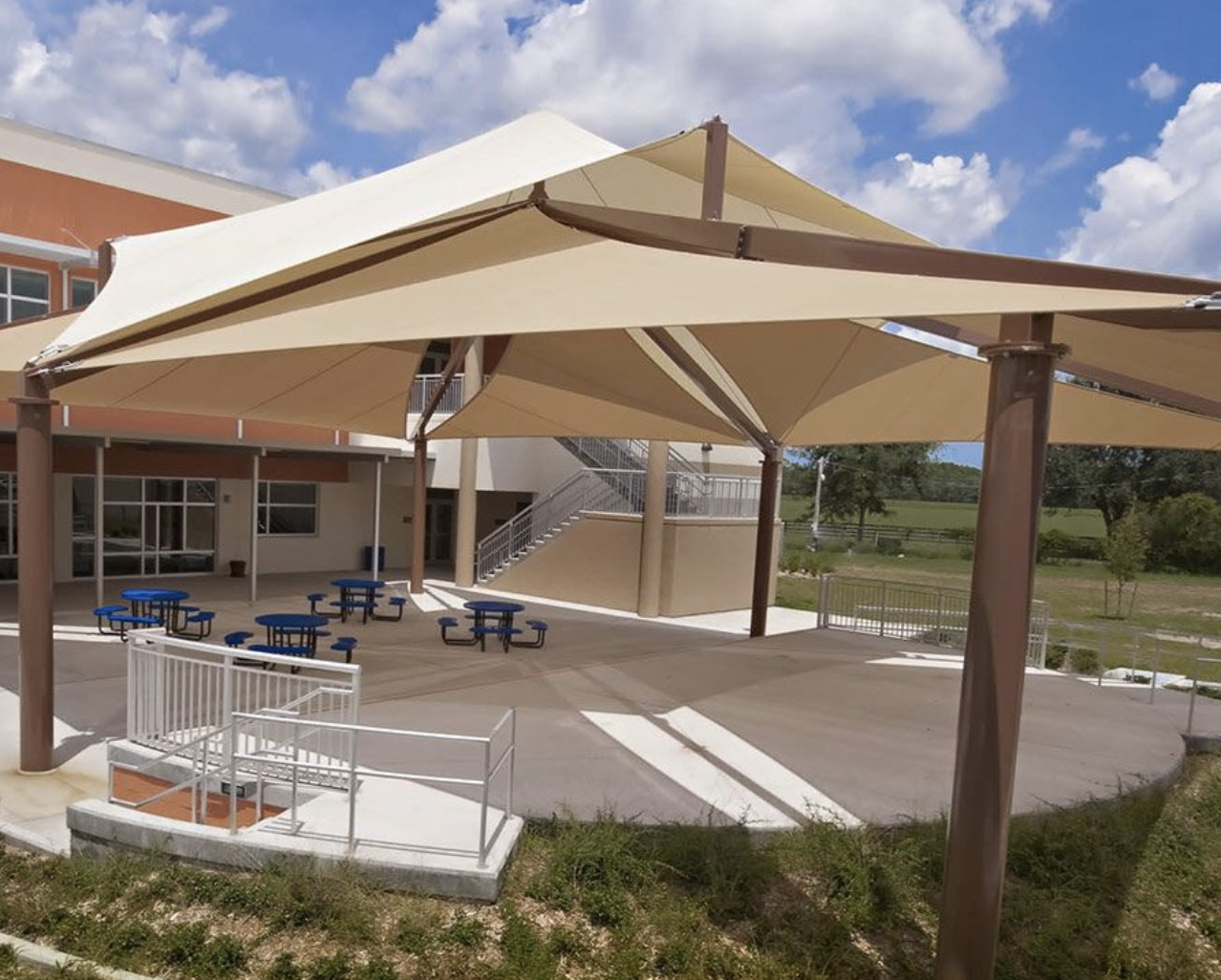
Modern shade structures are far more than simple coverings. Today’s designs allow planners to integrate shade into the visual identity and overall flow of a park. When planned early in the design process, playground shade structures can:
- Frame play zones and gathering spaces.
- Define entrances or focal points.
- Complement natural elements like trees and landscaping.
- Reinforce architectural themes throughout the park.
Available options range from fabric canopies and cantilevered structures to pavilions and pergolas, each offering unique aesthetic and functional advantages. The key is to design shade intentionally, making it an integral part of a park’s character rather than an afterthought.
Blending Natural and Structural Shade
A well-designed park combines both natural and built sources of shade. Trees provide long-term environmental benefits such as cooling, carbon absorption, and habitat support, while playground shade structures deliver immediate protection and predictability.
Structural shade is especially valuable when:
- Trees are immature or slow-growing.
- Specific areas require guaranteed coverage.
- Consistent shade is needed for seating or play equipment.
- Events or programming demand reliable shelter.
By layering both natural and structural shade strategies, park planners can create resilient outdoor spaces that remain comfortable, functional, and inviting as they evolve over time.
Weather Protection Beyond the Sun
While sun protection is often the primary focus, playground shade structures and shelters also provide valuable protection from light rain and shifting weather conditions. This added versatility increases the return on investment for parks, schools, and community spaces.
Covered areas support:
- Outdoor classrooms and educational programs.
- Community gatherings and small events.
- Picnic and social spaces.
- Flexible year-round use.
In many communities, these shaded structures become informal gathering points where neighbors connect.
Long-Term Value and Maintenance Considerations
From a planning perspective, shade and shelter play a vital role in long-term durability and lifecycle value. Shaded equipment, seating, and surfaces experience less heat-related wear, while well-designed playground shade structures often require minimal maintenance over time.
Key considerations for lasting performance include:
- Selecting materials rated for local climate conditions.
- Meeting wind, snow, and load requirements.
- Integrating with existing site utilities and infrastructure.
- Positioning to avoid conflicts with fall zones and circulation paths.
Partnering with experienced recreation designers ensures that every shade structure meets current safety standards and aligns with the park’s long-term maintenance strategy and budget goals.
Churchich Designs Parks People Actually Use
The most successful parks are not defined by how they look on opening day, but by how well they serve their communities for years to come. Shade and shelter play a decisive role in that long-term success.
For planners focused on maximizing public value, playground shade structures offer measurable benefits: healthier users, longer visits, greater accessibility, and more vibrant, inclusive spaces.
Churchich Recreation partners with park and community planners to integrate shade systems and shelter, and seating into cohesive recreation designs that prioritize comfort, safety, and long-term usability.
From early concept planning to final installation, the Churchich team ensures every solution aligns with site conditions, design goals, and community needs.
Contact Churchich Recreation today to explore shade and shelter options that can elevate your next playground or park project.