
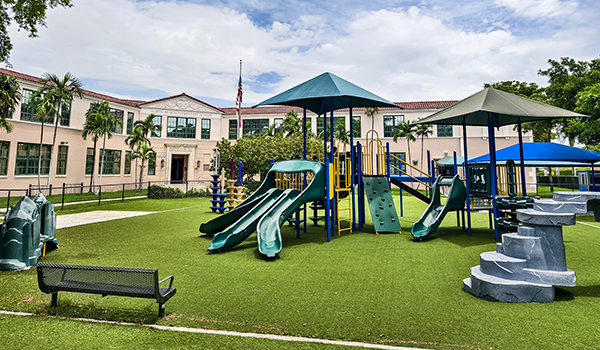
Replacing a school playground is more than just swapping out old equipment. It’s an opportunity to create a safer, more inclusive and more engaging environment where students can learn, grow and thrive.
Today’s playgrounds are expected to do a lot: support physical development, encourage social interaction, meet strict safety standards and reflect the needs of modern students and educators. Whether your playground is outdated, damaged or simply no longer meeting your students’ needs, taking a strategic approach to replacement is key.
Here’s what every school should consider before starting a playground replacement project.
Why Playground Replacement Matters More Than Ever
Playgrounds are essential to childhood development, but they also come with real risks if not designed properly.
Each year, more than 200,000 children in the U.S. are treated in emergency rooms for playground-related injuries and most of those injuries are caused by falls.
Even more striking, about 45% of playground injuries occur on school playgrounds, making schools one of the most critical environments to prioritize safety.
Replacing an outdated playground isn’t just a facilities upgrade. It’s a proactive investment in student safety, accessibility and overall well-being.
Safety Comes First, Always
Safety should be the foundation of every playground decision.
Key Safety Considerations:
- Fall Protection: Falls account for the majority of playground injuries, so impact-absorbing surfacing is essential.
- Proper Spacing: Equipment should be spaced to avoid overcrowding and collisions.
- Guardrails and Barriers: Platforms over 30 inches should include protective barriers.
- Hazard-Free Design: Eliminate sharp edges, protruding hardware and entrapment risks.
The U.S. Consumer Product Safety Commission (CPSC) emphasizes that playgrounds should never be installed over hard surfaces like concrete or asphalt due to the risk of serious head injuries.
A well-designed playground doesn’t eliminate risk, but it minimizes preventable injuries while still allowing kids to explore and challenge themselves.
Choosing the Right Playground Surfacing
If there’s one element that makes the biggest difference in safety, it’s surfacing.
More than 70% of playground injuries involve falls and many occur due to inadequate ground materials.
Popular Surfacing Options:
- Engineered Wood Fiber (EWF): Cost-effective and widely used
- Poured-in-Place Rubber: Durable, low-maintenance and ADA-accessible
- Rubber Mulch or Tiles: Strong shock absorption and long lifespan
- Artificial Turf Systems: Clean and visually appealing
Proper surfacing depth and maintenance are critical because even the best material can become unsafe if not maintained over time.
Accessibility & Inclusive Play
Modern playgrounds are designed for every child, not just the majority.
Schools should ensure compliance with the Americans with Disabilities Act (ADA), which requires accessible routes, inclusive equipment and surfacing that supports mobility devices.
Inclusive Design Features:
- Ramps and transfer stations
- Sensory play elements
- Ground-level activities
- Accessible pathways and surfacing
An inclusive playground doesn’t just meet regulations. It fosters a sense of belonging, encourages empathy and ensures all students can participate.
Age-Appropriate Design Matters
Not all students play the same way, and your playground should reflect that.
Best Practices:
- Separate play areas for different age groups
- Equipment scaled to physical and cognitive abilities
- Clear signage to guide appropriate use
Younger children need lower platforms and simpler structures, while older students benefit from more challenging features that promote strength, coordination and problem-solving.
Designing for age-appropriateness reduces injury risk and enhances the overall play experience.
Layout, Flow & Space Planning
A great playground isn’t just about equipment. It’s about how everything works together.
Smart Layout Considerations:
- Adequate use zones around equipment
- Clear sightlines for supervision
- Separation of high-activity areas (like swings)
- Traffic flow that prevents congestion
Overcrowding and poor layout are common contributors to playground accidents.
A thoughtful design creates a safer, more enjoyable space for both students and staff.
Durability & Material Selection
School playgrounds experience heavy daily use, so durability is critical.
What to Look For:
- Weather-resistant materials
- UV-stable finishes
- Rust-and corrosion-resistant components
- Low-maintenance design
Modern playground equipment is engineered to withstand years of wear while maintaining safety and performance standards.
Choosing high-quality materials upfront can significantly reduce long-term maintenance costs.
Shade, Comfort & Environmental Factors
Playgrounds should be enjoyable in all conditions, not just on mild days.
Environmental Considerations:
- Shade structures or natural shade
- Heat-resistant materials
- Proper drainage
- Safe distance from traffic or hazards
Play areas should also offer protection from sun exposure, especially during peak hours.
Comfort plays a major role in how often students use the space and how safe they are while doing so.
Maintenance & Inspection Planning
A new playground is only as safe as it is well-maintained.
Ongoing Responsibilities:
- Routine inspections for wear and damage
- Surfacing replenishment or repairs
- Tightening hardware and replacing worn components
- Documenting maintenance and incident reports
Regular inspections are often required by insurance providers and help reduce liability risks while ensuring long-term safety.
Planning for maintenance from the beginning ensures your investment continues to deliver value for years to come.
Budgeting & Long-Term Value
While cost is always a factor, focusing only on upfront pricing can lead to higher expenses over time.
Consider the Full Lifecycle:
- Installation costs
- Maintenance requirements
- Expected lifespan
- Safety and liability implications
Investing in quality equipment, proper surfacing and thoughtful design can reduce injuries, lower maintenance costs and extend the life of your playground.
Partnering with the Right Playground Expert
Replacing a playground is a complex process and working with the right partner makes all the difference.
An experienced provider like Churchich Recreation can help schools:
- Navigate safety and compliance standards
- Design age-appropriate and inclusive spaces
- Select durable, high-quality materials
- Maximize budget and long-term value
From concept to completion, expert guidance ensures your playground meets both today’s needs and tomorrow’s expectations.
Ready to Reimagine Your Playground?
Replacing a school playground is an opportunity to do more than upgrade equipment. It’s a chance to create a space that inspires movement, imagination and connection.
By prioritizing safety, accessibility, durability and thoughtful design, schools can build playgrounds that not only reduce risk but also enhance the student experience.
Because at the end of the day, a well-designed playground isn’t just a place to play, it’s a place where children grow.
Churchich Recreation specializes in designing safe, engaging and inclusive playgrounds tailored to schools and communities. Contact our team today to start planning a playground your students will love for years to come.