
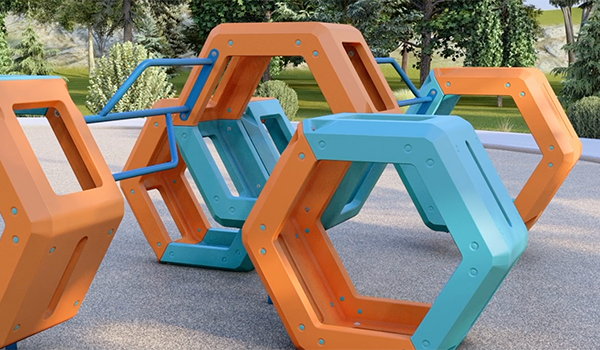
Across the country, playground design is evolving. Traditional swings and slides still have their place, but communities are increasingly seeking more dynamic play environments that challenge children physically, mentally and socially. One of the most exciting developments in modern playground design is geometric terrain play systems, such as the innovative Hex Quest™ climber series from Miracle® Recreation.
These bold, hexagon-shaped climbing structures create a new kind of play environment where children can explore, climb, crawl and problem-solve in ways that go far beyond traditional playground equipment. For recreation planners, schools, municipalities and parks departments, products like Hex Quest represent the future of outdoor play, combining creativity, physical activity and inclusive design.
For organizations like Churchich Recreation that help communities build engaging playground spaces, these geometric terrain products offer a powerful way to inspire active play and create memorable recreational environments.
Below, we’ll explore what Hex Quest is, why geometric terrain structures are gaining popularity and how these innovative playground designs benefit child development and community recreation.
What is Hex Quest?
Hex Quest is a modular playground climber system built around interconnected hexagonal structures. These climbers form a geometric landscape where children can climb through openings, crawl across surfaces and navigate a variety of routes through the structure.
Unlike traditional climbing frames with a single ladder or fixed route, Hex Quest encourages open-ended exploration. Each hex module connects with others to create a series of play paths, allowing children to choose how they move through the structure.
Key characteristics of Hex Quest playground equipment include:
- Hexagonal modular design that creates geometric terrain
- Durable rotomolded plastic construction
- Multiple configurations for different age groups
- Open sightlines so caregivers can supervise easily
- Routes with varying difficulty levels
- Opportunities for both climbing and imaginative play
Many configurations are designed for children from 18 months through 12 years old, ensuring that the equipment can support a wide range of developmental stages.
Some models can accommodate up to 20 children at once, creating a collaborative play environment where kids explore together.
The result is a playground feature that acts less like a single structure and more like a miniature climbing landscape.
The Concept of Geometric Terrain Play
Hex Quest is part of a broader trend in playground design called terrain-based play or playscape design. Instead of a single central play structure, terrain playgrounds create varied landscapes where children move across different elements.
A playscape is defined as an area designed for children’s play that may incorporate structures, terrain features and natural elements to create an interactive environment.
The goal is to encourage movement across the entire space, rather than limiting activity to one piece of equipment.
Modern geometric terrain playgrounds may include:
- Climbing pods and geometric structures
- Rope courses and balance elements
- Sculptural play components
- Multi-level surfaces and pathways
These designs mimic the kinds of environments children naturally enjoy exploring, such as rock formations, hills, tunnels and natural obstacles.
Hex Quest brings this concept to life using repeating hexagon shapes, which create endless pathways and climbing possibilities.
Why Climbing Play is Essential for Child Development
Climbing is one of the most beneficial activities children can engage in during outdoor play.
Research shows that playground climbing structures help children develop motor skills, balance, coordination and spatial awareness.
When children climb, they must constantly evaluate their environment and decide where to move next. This process strengthens both physical and cognitive abilities.
Physical Benefits:
Climbing structures provide a full-body workout for children. As they move through a climber, kids engage their arms, legs and core muscles while building strength and endurance.
Regular climbing play helps develop:
- Gross motor skills
- Muscle strength
- Balance and coordination
- Cardiovascular fitness
- Flexibility
Climbing also stimulates the vestibular system, which helps children develop balance and body awareness.
Cognitive Benefits:
Climbing is also a mental exercise. Kids must plan their movements, assess distances and remember which routes they’ve already taken.
This helps improve:
- Problem-solving skills
- Memory and concentration
- Spatial reasoning
- Decision-making abilities
Children effectively treat climbing structures like puzzles, constantly strategizing their next move.
Emotional and Social Benefits:
Playground climbing encourages children to take safe risks, build confidence and develop independence.
It also fosters:
- Teamwork
- Communication
- Cooperative play
- Confidence and resilience
Because children often climb together, these structures naturally promote social interaction and teamwork.
How Hex Quest Encourages Exploratory Play
What sets Hex Quest apart from traditional playground equipment is its multi-directional design.
Instead of climbing up and sliding down, children can:
- Crawl through openings
- Climb across the tops
- Move through tunnels
- Create imaginative play scenarios
The hexagonal geometry naturally creates multiple pathways, allowing kids to experiment with different routes every time they play.
This open-ended design encourages:
- Creativity
- Exploration
- Problem-solving
- Social interaction
Children may use the hex pods as clubhouses, tunnels, climbing challenges or hideouts, depending on how they choose to play.
Because there’s no single “correct” way to use the structure, Hex Quest supports imaginative play and independent exploration.
Inclusive Play Opportunities
One of the most important goals in modern playground design is inclusivity.
Geometric terrain structures help achieve this by offering multiple play experiences at different heights and difficulty levels.
With Hex Quest, children can interact with the structure in many ways:
- Climbing
- Crawling
- Sitting and socializing
- Observing from different vantage points
This variety ensures that children with different abilities, confidence levels and play styles can all find ways to engage with the equipment.
Inclusive playground design helps ensure that all children, regardless of ability, can experience the joy and developmental benefits of play.
Durability and Safety in Modern Playground Design
While Hex Quest offers adventurous play, safety remains a top priority.
These structures are designed to meet international playground safety standards, including:
- ASTM
- CPSC
- CSA
- EN compliance
The rotomolded plastic construction ensures durability while maintaining smooth surfaces and safe openings.
In addition, the open hex structure provides clear sightlines for caregivers, making it easier to supervise children while they play.
These features help communities balance exciting play with responsible safety design.
Why Communities are Investing in Innovative Playground Equipment
Across the United States, parks and recreation departments are investing more heavily in modern playground experiences.
According to research on playground activity, well-designed play environments can significantly increase children’s physical activity levels, motor development and social interaction.
Communities are realizing that playgrounds are more than recreational amenities; they are essential tools for:
- Public health
- Childhood development
- Community engagement
- Outdoor education
Modern play systems like Hex Quest support these goals by encouraging active, imaginative and collaborative play.
Building Better Playgrounds with Churchich Recreation
As playground expectations continue to evolve, communities need experienced partners who understand both design innovation and safety standards.
Churchich Recreation works with schools, parks, municipalities and community organizations to bring cutting-edge playground equipment, like geometric terrain climbers, to life.
By combining innovative products with thoughtful playground planning, communities can create outdoor spaces that inspire children to:
- Move more
- Explore creatively
- Build confidence
- Connect with others
With modern play solutions like Hex Quest, the playground becomes more than a place to pass time. It becomes an interactive adventure landscape that supports the physical, mental and social development of the next generation.
The Future of Playground Design
Playgrounds have come a long way from simple jungle gyms and metal slides.
Today’s recreation environments emphasize creativity, exploration and developmental growth. Geometric terrain products like Hex Quest represent a new generation of playground equipment that blends design, engineering and child development research.
As communities continue investing in outdoor recreation, these innovative play structures will play an important role in creating engaging, inclusive and physically active spaces for children.
Contact Churchich Recreation today to learn how Hex Quest and other modern play systems can help you build a playground that encourages adventure, activity and imagination.